
Wiring, Outlets and Lighting in St. Paul
Dead outlets, failed switches and flickering lights found and fixed, plus new outlets, fixtures, fans and circuits.
Most electrical trouble in a house shows up at an outlet, a switch or a light. We repair those, trace the circuits behind them and replace worn receptacles before they fail.
We also add what a room is missing: new outlets, recessed and outdoor lighting, ceiling fans, GFCI outlets, hardwired smoke and carbon monoxide alarms, and dedicated circuits for appliances that need their own.
Outlets, Switches, Fixtures and Circuits
Each of these jobs comes with a few things worth knowing before the work starts.
| Task | Typical reason | Good to know |
|---|---|---|
| Outlets and GFCI outlets | A dead or loose outlet, a worn receptacle that no longer grips a plug, or no GFCI near water | One GFCI outlet can protect others further along the circuit, so one trip can leave several outlets dead. |
| Switches and dimmers | A switch that crackles, feels warm or has quit, or new dimming for LED bulbs | LEDs need a dimmer rated for them or they may flicker and buzz; some smart switches need a neutral wire that older boxes lack. |
| Recessed and ceiling lighting | Dark kitchens, basements and living rooms, or worn-out fixtures | Recessed lights that touch ceiling insulation must be rated for that contact (IC-rated). |
| Ceiling fans | Moving air in bedrooms and living rooms, or putting a fan where a light was | A fan hangs from a box listed for fan support; an ordinary light box may not hold the weight or the wobble. |
| Outdoor and landscape lighting | Lighting entries, steps, garages and paths | Outdoor fixtures need a wet or damp location rating. Low-voltage path lights run from a transformer plugged into a GFCI-protected outlet. |
| Dedicated appliance circuits | A microwave, freezer, dishwasher or window air conditioner that keeps tripping a busy circuit | A dedicated circuit feeds one appliance and does not also feed other outlets. |
| Hardwired smoke and CO alarms | Battery-only alarms in an older house, a remodel, or alarms past their replacement date | Hardwired alarms are usually interconnected, so one sounding sets off the rest. Minnesota requires a CO alarm within 10 feet of each bedroom. |
| Troubleshooting dead outlets and flickering lights | Part of a room has gone dead, lights flicker, or a breaker trips for no clear reason | Check the panel and any GFCI outlets in bathrooms, the garage or the basement first; if that fails, the cause is usually a loose connection on the circuit. |
Can you add outlets to a room that doesn’t have enough?
Usually, yes. A new outlet can often extend an existing circuit with room to spare, or get its own circuit from the panel. New outlets have to meet current rules, such as tamper-resistant receptacles and AFCI or GFCI protection where required. That beats running a room on power strips and extension cords.
Signs of a Wiring Problem
Wiring trouble usually gives some warning before it fails outright. Any of these is a reason to have the circuit checked:
- Outlets or switch plates that feel warm, or show brown or black marks
- Lights that flicker or dim when nothing else is starting up
- Outlets that no longer hold a plug firmly
- A breaker that trips again soon after you reset it
- Buzzing, crackling or a faint hot-plastic smell at an outlet, a switch or a fixture
- A mild shock or tingle from a switch plate, an appliance or a faucet
- Two-prong outlets throughout, or three-prong outlets with no ground behind them
- Cloth-covered wire or porcelain knobs in the basement or the attic
A strong burning smell or smoke is past the warning stage: leave the house and call 911, then follow the steps for electrical emergencies.
Is a warm outlet or switch dangerous?
A dimmer that feels slightly warm is normal, because dimmers give off a little heat. An outlet, a plug or an ordinary switch that feels warm, smells hot or shows discoloration usually means a loose connection or a worn device, and it gets worse under load. Stop using it, switch off its breaker if you can reach the panel safely, and have it checked.
What makes lights flicker?
A loose bulb, or an LED bulb on a dimmer not made for it, explains a lot of flicker. A brief dip when the air conditioner or the refrigerator starts is common on older circuits, but repeated flicker on one circuit points to a loose connection at a switch, a fixture or a splice. If lights all over the house brighten and dim together, call the utility first, because the cause can be in the service coming to the house.
Knob-and-Tube, Aluminum and Ungrounded Outlets
Knob-and-tube wiring, single wires run on porcelain knobs and through porcelain tubes, was standard in houses wired before the 1940s. It has no ground, its insulation turns brittle, and it was never meant to be buried in insulation. Much of it has been partly replaced, leaving old and new wire spliced together out of sight.
Aluminum branch wiring turns up in some houses built or remodeled in the late 1960s and early 1970s. The wire itself is rarely the trouble; the connections are, at outlets, switches and splices, where aluminum can loosen and overheat.
Two-prong outlets mark circuits with no equipment ground. They still work, but a fault on a metal appliance case has no safe path, and a three-prong adapter does nothing to change that. Inspecting older wiring and fixing missing or faulty grounding is part of our maintenance work.
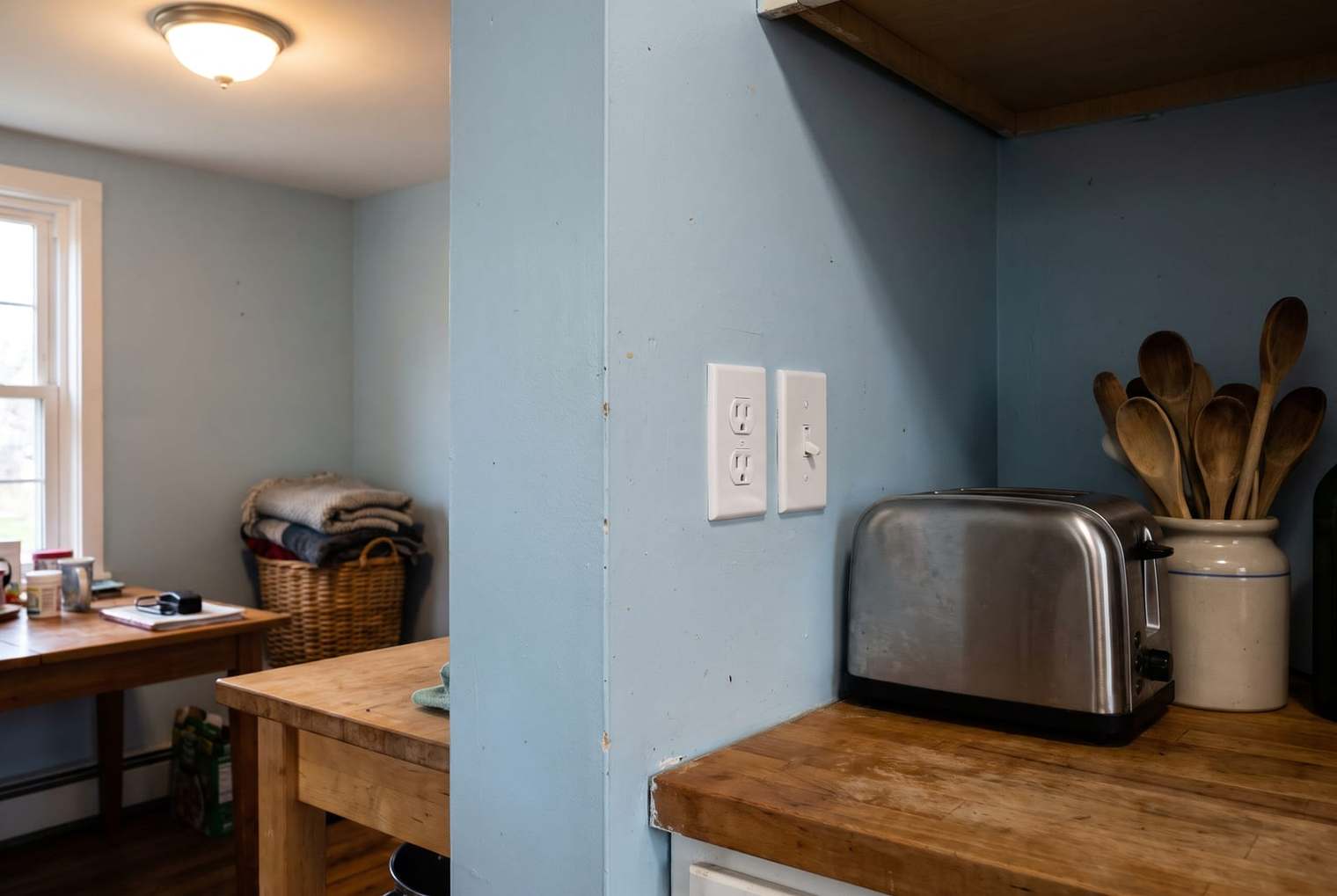
Can I replace a two-prong outlet with a three-prong one?
Only with a ground to connect it to, or with the right protection. Without a ground, the code allows a new two-prong outlet, a GFCI outlet labeled “No Equipment Ground”, or a three-prong outlet protected by a GFCI upstream and labeled to match; a new ground wire is another route. A three-prong outlet with nothing behind its ground hole looks safer than it is.
Is knob-and-tube or aluminum wiring dangerous?
Neither is an emergency on its own, but both deserve a look. Intact, uncovered knob-and-tube can keep working, yet it has no ground and doesn’t tolerate insulation or careless splices, so it is often replaced in stages. Aluminum branch wiring can usually stay if its connections are remade with connectors listed for joining aluminum to copper.
Adding Light to Kitchens and Closets
A kitchen works best with light in layers: recessed or surface-mounted downlights for the room, pendants over an island, and LED strips under the upper cabinets so the counter isn’t lit from behind you.
In older St. Paul houses the ceiling decides a lot. Plaster takes more care to cut than drywall, and joists or ductwork can sit where a light should go, so slim LED wafer lights, which need a small opening and little depth, are often the easier fit.

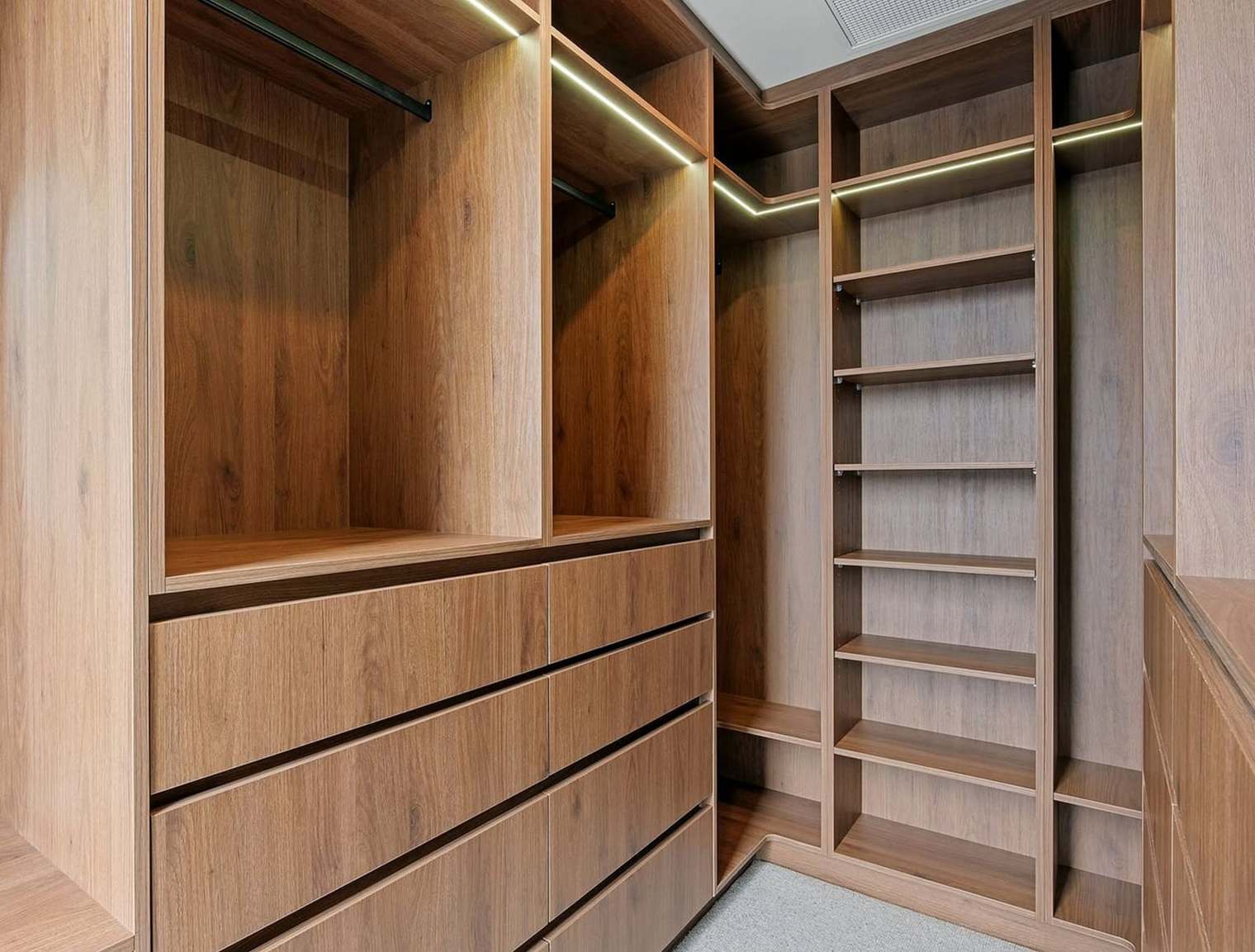
Closets, shelving and cabinets suit low-voltage LED strips. They run from a small driver, a power supply that has to stay reachable rather than sealed in a wall, and come on from a wall switch, a door switch or a motion sensor.
Whether it is one dead outlet or a room that needs more light, call and describe what you are seeing.