
Electrical Repairs, Upgrades and Installations in St. Paul
Repairs when something stops working, installations when you add something new, and maintenance for wiring that has been in the walls for decades.
Electrical work in a home or a business comes in three broad kinds, and we handle all of them:
- Repairs: dead outlets, breakers that keep tripping, flickering lights, failed switches and circuits that need tracing.
- Installation: panel upgrades, new circuits, recessed lighting, ceiling fans, outdoor lighting, GFCI outlets, hardwired smoke and carbon monoxide detectors, and EV charger circuits.
- Maintenance: inspecting older wiring, checking panel connections for heat damage, replacing worn receptacles, and fixing missing or faulty grounding.
Maintenance carries extra weight in St. Paul, where an older house often holds wiring from several eras at once: the original circuits, a mid-century addition and whatever the last remodel left behind. Each part can be sound on its own and still cause trouble where they meet.
Where Larger Projects Start
Bigger jobs tend to begin in one of three places: the panel that feeds the house, the wiring and lighting inside it, or a circuit for charging an electric car.
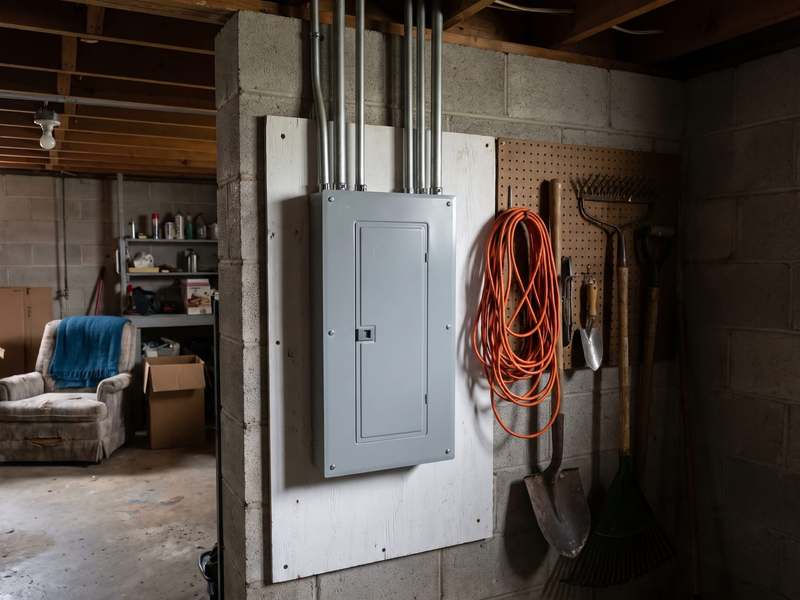
Panel Upgrades
New panels and larger service for older homes, additions and new loads.
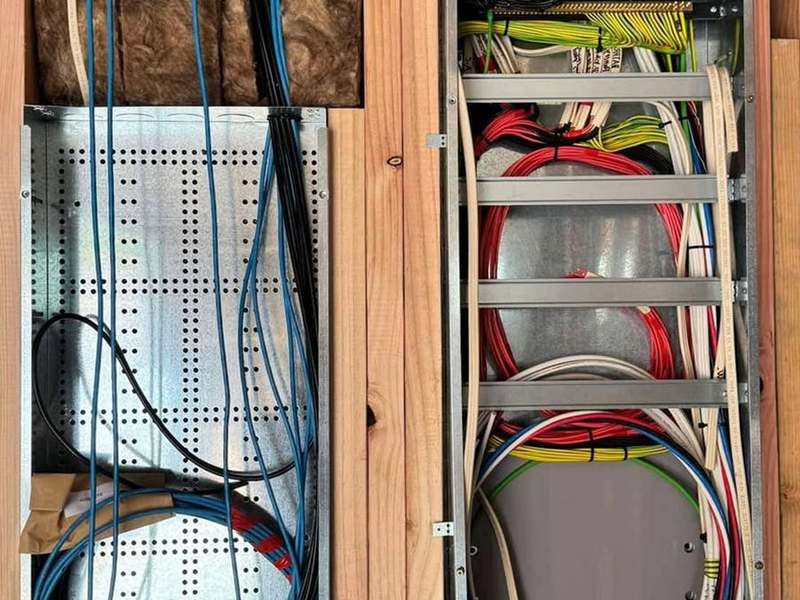
Wiring & Lighting
Outlets, switches, fixtures, fans and dedicated circuits, fixed or added.
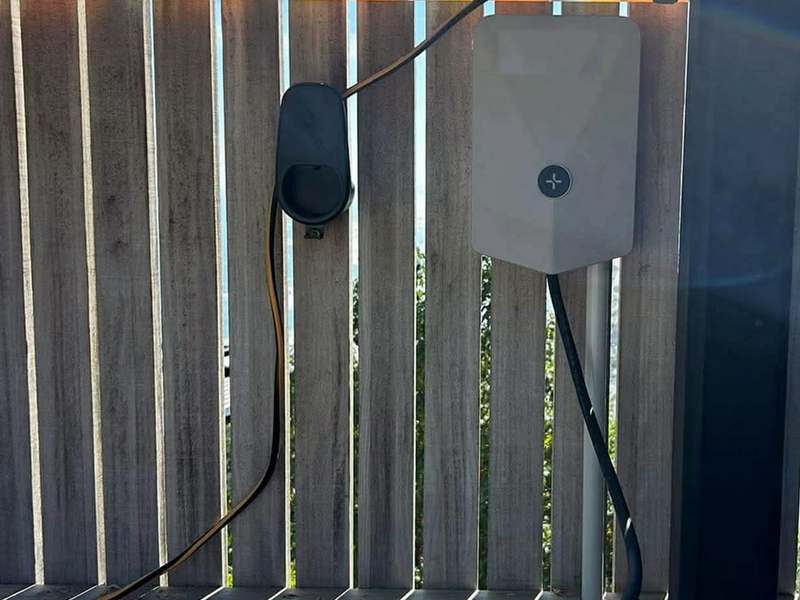
EV Charger Installation
A dedicated circuit and a charger mounted where you park.
What Fits Your Situation
A problem or a project rarely comes with a name attached, so start from what you are seeing or planning.
| Your situation | Where to start | Link |
|---|---|---|
| Fuses blow, breakers trip under normal use, or the panel has no open spaces left | Panel Upgrades | Panels and service size |
| An outlet is dead, a switch has failed, or a room needs more light or another outlet | Wiring & Lighting | Outlets and fixtures |
| You drive an electric car, or one is on the way | EV Chargers | Home charging circuits |
| You own a house or a small rental and have several projects in mind | Homeowners | Work in a lived-in home |
| You look after an office, a shop, a restaurant or an apartment building | Businesses | Occupied buildings |
| The power is out, a breaker won’t reset, or something smells hot | Emergencies | What to do first |
| You want to know which breakers and outlets guard against shock, fire or surges | Protection Options | Protection compared |
| You want a list of electrical upkeep for each season | Seasonal Guide | Upkeep by season |
Homes, Businesses and Urgent Problems
- Homeowners: electrical work planned around a house you live in, or a small rental with tenants in it.
- Businesses and property managers: work in offices, shops, restaurants and apartment buildings that stay in use.
- Electrical emergencies: when to leave and call 911, when to call the utility, and when to call an electrician.
Electrician, Appliance Repair or the Utility
When something stops working, the first question is whose problem it is.
How can I tell if the problem is the appliance or the circuit?
Plug a lamp or a phone charger you know works into the same outlet. If it runs, the outlet is live and the appliance is the likely culprit; if it doesn’t, check the panel for a tripped breaker and nearby GFCI outlets for a tripped button. A breaker that trips only when one appliance runs, with nothing else on the circuit, points to the appliance, while one that trips with nothing plugged in points to the wiring.
Do you repair appliances?
Our work covers the power to an appliance: the circuit, the breaker, the outlet and, for hardwired equipment such as a cooktop or an electric water heater, the connection itself. A fault inside the appliance, like a burned-out heating element or a failed control board, is work for an appliance repair technician or the maker. When it isn’t clear which side the fault is on, testing the outlet or the circuit first settles it.
Does the utility fix anything inside my house?
Generally not. The utility’s equipment usually ends at the meter, and everything past it, from the panel to the last outlet, belongs to the house. If one room or one circuit is out while the rest of the house works, the cause is on the house side and the call is to an electrician.
Who fixes the meter or the wires that run to the house?
The utility owns and repairs the overhead or underground line from the street and the meter itself. The meter socket, the mast or conduit on the outside wall and the cable into the panel generally belong to the owner, and repairs there are electrician work that usually needs a permit and a utility disconnect. If a line is down or sparking, keep well away and follow the steps for electrical emergencies.
One call is usually enough to tell a repair from an upgrade, or from a job for the utility.