
Our Approach to Electrical Work
How a typical job runs, from the first look to the final test, and the code rules behind each step.
Every job, from one dead outlet to a new panel, runs in the same order: we find out what is there, explain the choices, do the work and test it before calling it finished. Knowing the order makes the work easier to plan around.
The Stages of a Typical Job
The Assessment
The first step is finding out what is going on. Expect questions about what you have noticed and when it started, a look inside the panel and checks at the outlets, switches or fixtures involved. A fault that comes and goes can mean switching circuits off one at a time to see what goes dark. In a house built before 1950 this stage takes longer, because someone has to work out what earlier owners and electricians left behind the plaster before anything is cut.
The Options
Most problems have more than one fix. A worn outlet can simply be replaced, while a circuit that keeps tripping might need its load split, a new circuit or a closer look at the panel. Expect to hear what each option involves, what it solves and what it leaves alone, and whether it needs a permit. For bigger work such as a panel upgrade, the choices usually include the size of the new service.
The Work
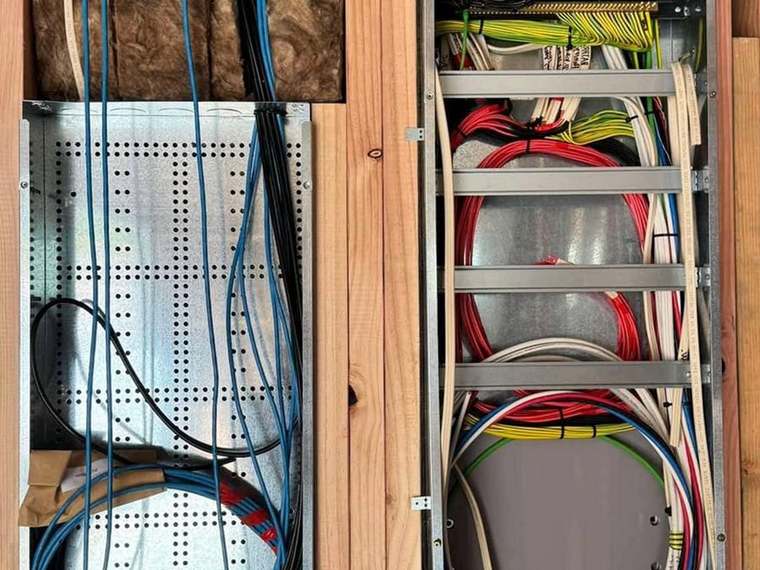
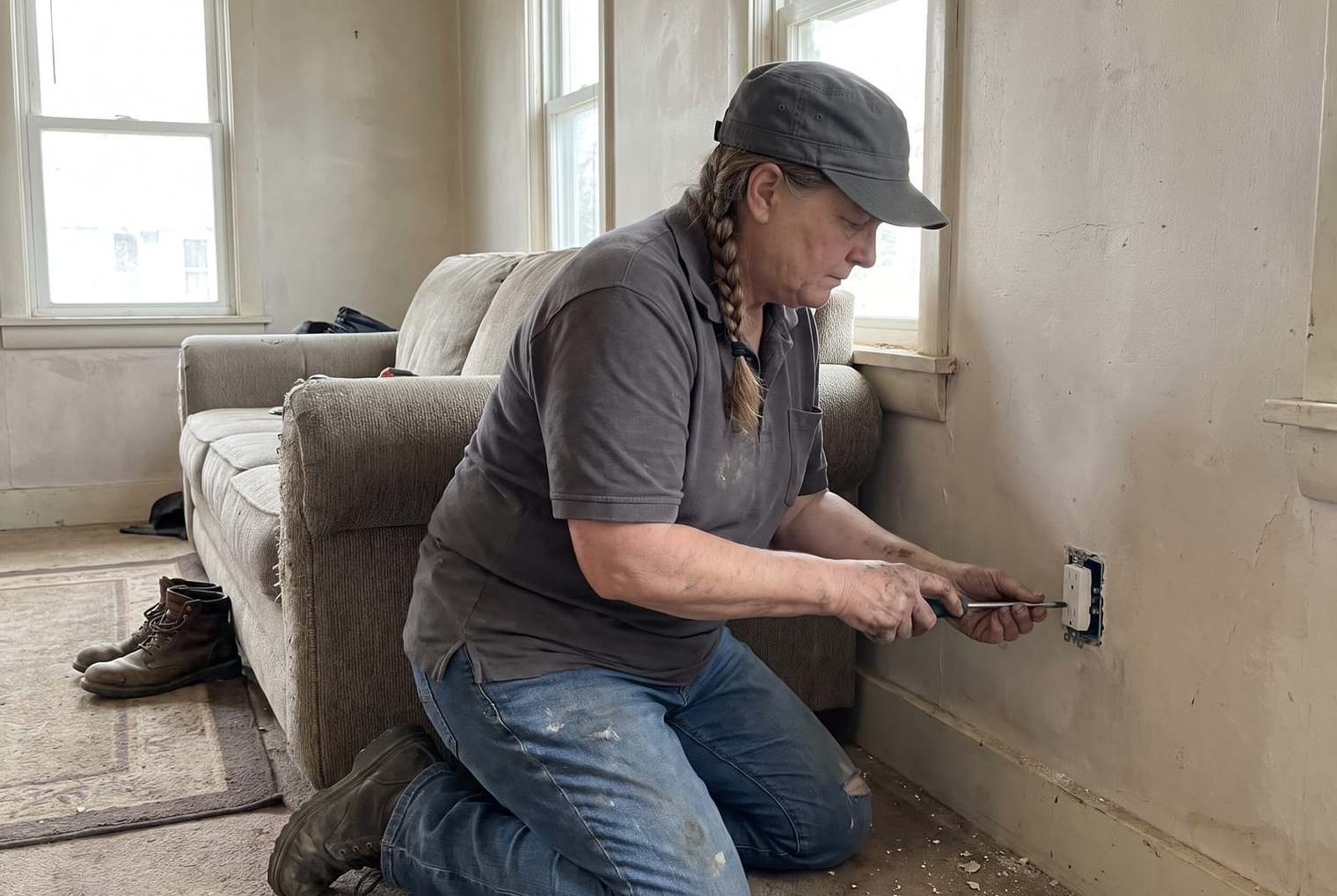
Before touching a wire, an electrician switches the circuit off at the panel and tests that it is dead. Outlet, switch and fixture work usually turns off only the circuits involved; work inside the panel turns off the whole house for a while. In finished walls, new cable is fished through small openings where it can be. In open walls and unfinished basements it is run, fastened and boxed before anything is covered, the stage a rough-in inspection looks at.
Testing and Labeling
Once the work is in, it gets tested. Expect a plug-in tester at the outlets, test buttons pressed on GFCI and AFCI devices, lights and fans run through their switches, and new equipment such as an EV charger run under load. Labeling comes last: before Terry Clark leaves a job, every circuit he touched gets a clear, handwritten line in the panel directory. A job with a permit then gets its final inspection.
Will the power be off while you work?
Usually only on the circuits being worked on, and only while that work is underway, so lights and outlets elsewhere in the house stay on. Work inside the panel itself turns off the whole house for a stretch, which is worth planning around if you work from home.
Why test a circuit that already seems to work?
Because a circuit can work and still be unsafe. Reversed wires, a missing ground or a GFCI that no longer trips all leave the lights on, and only a tester or a test button shows them. On panel work, testing also confirms that each breaker matches the wire it protects and that every connection is tight.
Staying Safe During the Work
Safety on the job is mostly the electrician’s responsibility, but a few things on your side help everyone in the house.
- Keep children and pets out of the work area, especially while the panel cover is off.
- Leave breakers and switches alone while the work is underway, even if something you need has gone off. Ask first.
- Clear a path to the panel and the rooms involved, and move boxes or shelves away from the front of the panel.
- Mention medical equipment, a sump pump or a freezer that has to keep running, so shutoffs can be timed around it.
- Point out anything you have noticed lately, such as a warm cover plate, a buzzing breaker or a light that flickers, even if it seems unrelated.
- Stay out of the attic or crawl space while cable is being pulled through it.
Permits, Inspections and Code Rules
Minnesota adopts the National Electrical Code as its state electrical code, and inspectors check permitted work against the edition in force. Each of these rules can change what a house job involves.
| Rule | What it means for the customer | Typical jobs affected |
|---|---|---|
| Permits and inspections | New wiring, new circuits and panel or service work usually need a permit, and the permit brings an inspection. | Panel upgrades, new circuits, EV charger circuits, remodels |
| Licensed electricians | Minnesota generally requires a licensed electrician working for a licensed contractor. Homeowners have a limited exception for a single-family house they own and live in, still with a permit and an inspection. | All hired electrical work, in houses, rentals and businesses |
| GFCI protection | Outlets near water and in damp places need ground-fault protection, from a GFCI outlet or a GFCI breaker, which cuts the power when current leaks to ground. | Kitchens, bathrooms, laundry areas, basements, garages and outdoor outlets |
| AFCI protection | New and extended circuits in most living areas need arc-fault protection against sparking from loose or damaged wiring. Some older panels have no AFCI breaker made for them. | New circuits and added outlets in bedrooms, living rooms, kitchens and hallways |
| Grounding and bonding | The panel needs a solid connection to the earth, with metal water and gas piping bonded to it, so a fault trips the breaker. Older houses often fall short here. | Panel upgrades, service changes, replacing two-prong outlets |
| Working space at the panel | A clear space about 36 inches deep and 30 inches wide stays open in front of the panel, with no shelves or storage in it. Panels can’t go in bathrooms or clothes closets. | Panel upgrades and moves, basement finishing |
| Load calculations | Before a service is sized or a big load is added, the home’s demand is worked out by the code’s method, so expect questions about heating, cooking, the dryer, air conditioning and any EV charger or hot tub. | EV charger circuits, panel upgrades, heat pumps, additions |
Does my job need an electrical permit?
If it adds wiring or a circuit, or changes the panel or the service, almost certainly. The permit is normally taken out by whoever does the work, and it brings an inspection with it, so it is worth asking about before the job starts rather than after.
What does an electrical inspector look at?
A larger job may get two visits: a rough-in inspection while the walls are still open, and a final one once devices, fixtures and covers are in. The inspector checks the work against the code, from GFCI and AFCI protection to breaker and wire sizes, grounding and the space in front of the panel. Anything that needs correcting gets fixed and checked again.
Which electrical jobs can I safely do myself?
Resetting a tripped breaker, pressing GFCI test buttons, changing bulbs and testing alarms are everyday homeowner jobs. Minnesota does let homeowners do some wiring in a single-family house they own and live in, with a permit and an inspection, but mistakes inside walls can stay hidden for years. Work inside the panel, on the service or in a rental is best left to an electrician.
Every job starts with a look at what is already there, so tell us what you are seeing.