
EV Charger Circuits and Installation in St. Paul
A dedicated circuit from your panel to where you park, sized to the charger and to what the panel can carry.
An electric car can charge from an ordinary outlet, but many owners soon want something faster. A home charger is mostly an electrical job: a dedicated circuit from the panel to where you park, with the charger mounted and connected at the end of it.
The first question is not the charger, though. It is whether the panel can carry a load that may run for hours every night. In older St. Paul houses, where the service was sized long before anyone plugged in a car, that answer shapes the rest of the job.
How the Home Charging Levels Compare
| Level | Voltage | Typical circuit | Typical range added per hour of charging | Best suited to |
|---|---|---|---|---|
| Level 1 | 120 V | A standard 15- or 20-amp household outlet, ideally on a circuit that does not also feed other loads | Roughly 3–5 miles | Short daily drives, plug-in hybrids and cars that sit plugged in overnight and most of the weekend |
| Level 2 | 240 V | A dedicated 40- to 60-amp circuit for a charger that draws 32 to 48 amps | Roughly 20–40 miles, depending on the car | Fully electric cars, longer commutes and households with two cars to charge |
These figures are typical and vary by vehicle: the car’s onboard charger, the battery’s size and temperature and the charger’s setting all change the real number.
DC fast charging, the kind found along highways, runs on large commercial services at power levels no house is built to supply. It is a commercial installation, not a home one.
Sizing and Running the Charger Circuit
A Level 2 charger is what the electrical code treats as a continuous load: it can draw its full current for hours at a time. The circuit is sized for that, with the breaker and the wire rated at 125 percent of the charger’s draw, so a 32-amp charger needs a 40-amp circuit and a 48-amp charger needs a 60-amp one.
From the panel, the circuit runs in cable or conduit depending on the route: across a basement ceiling, along a garage wall or underground to a detached garage. A new charger circuit generally needs an electrical permit and an inspection, and an outlet installed for EV charging needs GFCI protection under current code.
How do I choose a home charger?
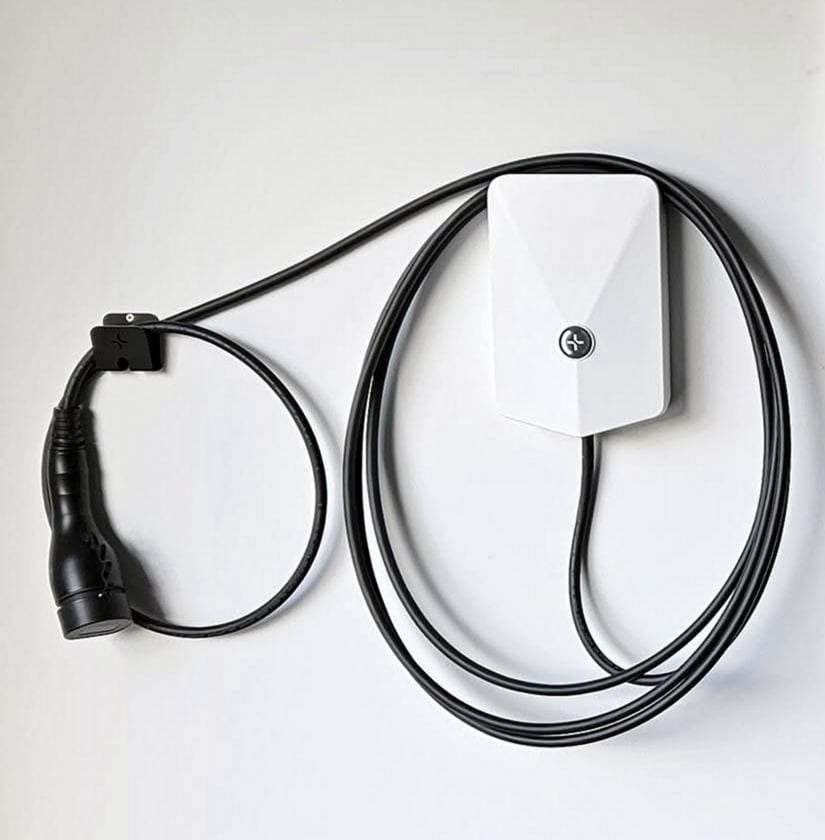
Start with the car. Its onboard charger sets the most it can accept, so a 48-amp charger adds nothing for a car that takes 32 amps. Then look at the cable length, an outdoor rating if the charger will hang outside, and whether its current can be turned down if the panel is tight. Pick one listed by a recognized testing laboratory, such as UL.
Should the charger plug into an outlet or be hardwired?
A plug-in charger on a 240-volt outlet is easy to swap or take with you when you move. The outlet has drawbacks, though: it needs GFCI protection, which can clash with a charger’s own ground-fault sensing and cause trips, and a receptacle that carries a heavy load every night wears over time. A 50-amp outlet also limits the charger to 40 amps. Hardwiring skips the outlet, allows the higher settings and is often the simpler choice outdoors.
Checking the Panel Before a Charger Goes In
A Level 2 charger can be the largest single load in a house, drawing more than an electric dryer and running far longer. Before one is added, we check the existing service against everything it already carries, using the load calculation in the electrical code rather than a glance at the main breaker.
A house on a 60- or 100-amp service, especially one with an electric range, a dryer or central air, often has little room left. There are several ways forward: set the charger to a lower current, add a load-management device that pauses charging while other large appliances run, or move to a larger service. Service sizes and panel replacement are covered under panel upgrades.
Does my panel have enough capacity for an EV charger?
It depends on the size of the service and what the house already runs, not only on whether there is an empty space for a breaker. A 200-amp service in a house with gas heat and a gas range usually has room for a charger; a 100-amp service with electric heat, an electric dryer and central air may not. A load calculation gives the real answer.
Mounting the Charger Indoors or Outside
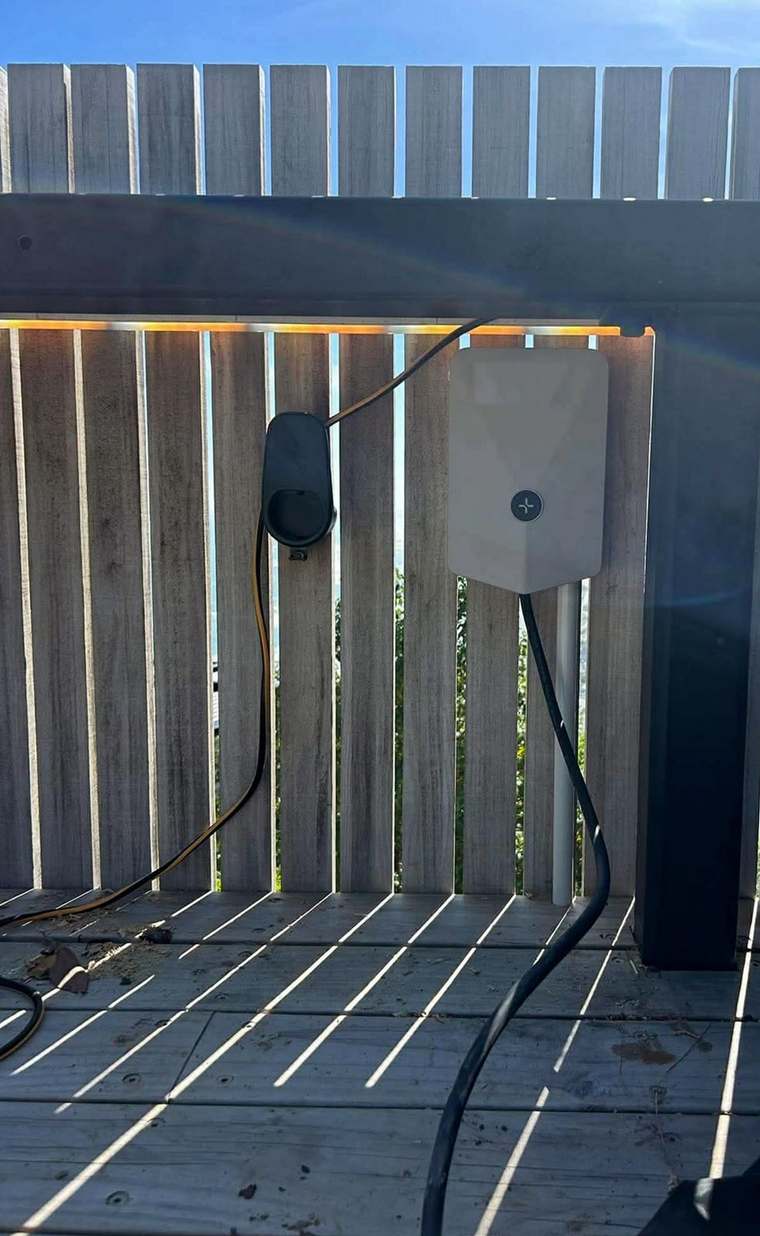
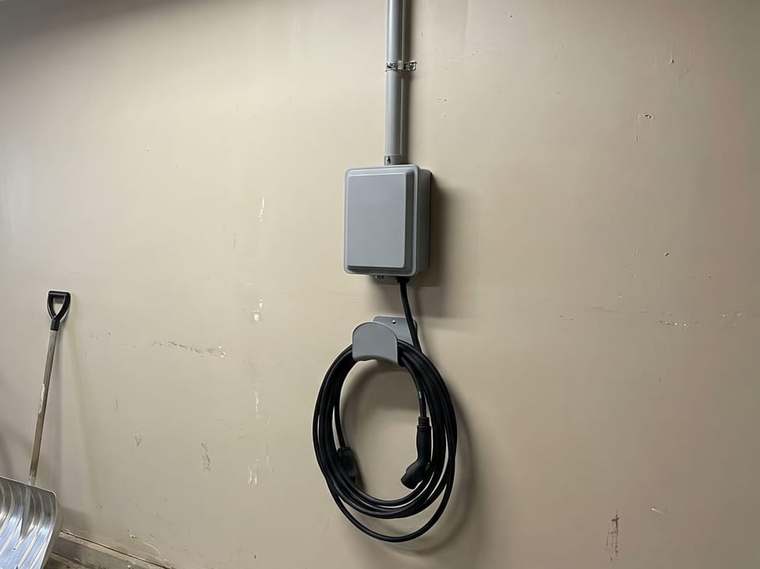
An attached garage with the panel on the other side of the wall is the simplest case: a short run and a charger out of the weather. A charger on an outside wall or a post needs an enclosure rated for outdoor use, a cable long enough to reach the charge port without lying across a walkway, and a spot high enough that snow sliding off the roof or thrown from the driveway won’t bury it.
Can a charger go in a detached garage?
Yes, but the circuit has to reach it, usually through a trench for an underground run, and buried utility lines are marked through 811 before anyone digs. A small existing garage circuit for lights and a door opener won’t carry a Level 2 charger, so the usual answer is a new feeder from the house, sometimes to a small sub-panel in the garage.
Will a home charger work through a Minnesota winter?
Yes. Chargers rated for outdoor use are built for freezing weather; check the rated temperature range and choose a cable that stays flexible in the cold. The car is the bigger factor: a cold battery takes charge more slowly, and the car spends some energy warming itself. Left plugged in overnight with a departure time set, it can warm the battery and cabin from the wall instead of from the battery.
Charger Details Worth Gathering First
A few answers make the first conversation about a charger quick and specific:
- Where the main panel is: basement, garage or utility room
- Roughly how far it is from the panel to where you park, and what lies between: a finished ceiling, a wall or a yard
- The charger model you have chosen, or the current it draws in amps
- Whether you want it plugged into an outlet or hardwired
- Whether it will hang inside the garage or outdoors on a wall or post
- Which side of the car the charge port is on
- Any other large loads you plan to add, such as a heat pump or a hot tub
Send them with your request through Schedule Service, or keep them handy for the call.
Have the charger’s model and your parking spot in mind, and call to talk through the circuit it needs.